
Floodplain Meadows Explained: How They Help Farmers, Wildlife and Downstream Towns
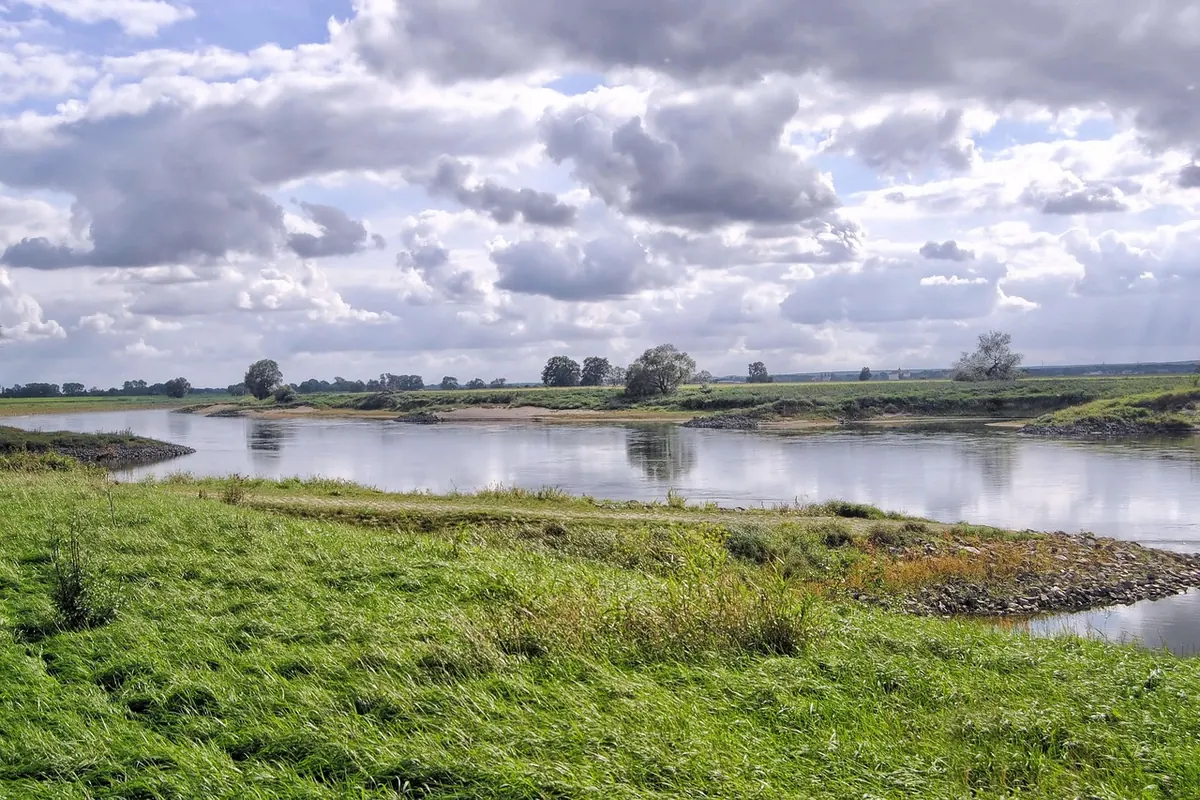
When a river spills over its bank in January, the usual response is to want the water gone. A floodplain meadow takes the opposite view: let it spread, hold it for a while, and release it slowly. The grass that grows after the water drops is why the system has worked for centuries.
Floodplain meadows are not a new idea dressed up for a grant application. They were once among the most valuable fields on a lowland farm, and the quickest way to recognise one today is by what grows in it — a mix of grasses and wildflowers that would struggle in a field fed with nitrogen every spring.
What counts as a floodplain meadow
The name covers a simple thing: grassland on the flat land a river has built up over centuries and still floods in most winters. It is cut for hay in summer and grazed afterwards. Nothing is irrigated, nothing is pumped. The river does the work.
Worth separating these from the older irrigated "water meadows" of southern England, which used carriers and hatches to run water deliberately across the grass in early spring to guard against frost. That is a different tradition. A floodplain meadow relies on natural flooding.
Typical features:
- Flat, low-lying ground inside the river's natural floodplain
- Flooded in most winters, sometimes for several days at a time
- A late hay cut, usually followed by autumn grazing
- Little or no artificial fertiliser, and rarely reseeded
- A mixed sward of grasses and wildflowers rather than ryegrass alone
Most lowland floodplains were drained, ploughed or built on during the twentieth century, so surviving examples are scattered and often isolated. That scarcity is part of why they attract so much attention now.
How they slow and store floodwater
Rough, tussocky grass is not smooth. Stems, leaves and uneven ground create drag, so water crossing a meadow moves far more slowly than it would across a bare field or a tidy reseeded ley. Slower water arrives downstream later and at a lower peak.
The storage is easy to picture with simple arithmetic. One hectare is 10,000 square metres. If a meadow holds an average of 20 centimetres of water across that hectare, that is 2,000 cubic metres sitting on land instead of in the channel. Spread that across several fields and the effect is real — though never unlimited.
Two other things happen at once. Sediment settles out, along with some of the nutrients attached to it, which helps water quality further down. And on porous gravels, part of the flow soaks away to recharge groundwater rather than running straight off.
Be honest about the scale. A restored meadow will not stop a town flooding after a month of rain. What it can do is shave the top off smaller and medium events and add capacity to a catchment-wide approach that also includes upstream woodland, storage areas and, where they are needed, engineered defences.
Timing matters as much as volume
A meadow grazed flat by November has lost most of its roughness before the wettest months arrive. Leaving a little more cover into autumn, and keeping grazing light, preserves the drag that slows water. Gateways, tracks and fence lines all decide where water will channel and scour, so it is worth thinking about them before the next flood rather than after it.
The case for the farm business
A floodplain meadow is not set-aside. It produces a crop.
The hay is later and coarser than silage from an intensive ley, and yields are lower. In exchange, the field asks for almost nothing: no bagged nitrogen, no regular reseeding, fewer machinery passes. Silt left by winter floods brings a modest free supply of nutrients — though it also brings debris to clear and, after a pollution incident, inputs you did not choose.
There is usually a market for traditional hay and haylage from species-rich grassland, particularly among smallholders, horse owners and conservation graziers, but local demand varies enormously. Test it before committing a whole farm to it.
Aftermath grazing with cattle or sheep in autumn keeps the sward open and can be fitted around a lowland suckler or sheep enterprise. Conservation grazing agreements, where a wildlife organisation pays for grazing on a sensitive site, are another route, and often suit youngstock or native breeds.
Agri-environment payments have kept many meadows alive. Rules, rates and names differ between England, Scotland, Wales and Northern Ireland, and they change. Check current options with your national advisory service or a qualified farm adviser before you sign anything, and read the small print on cutting and grazing dates — those are usually conditions of payment.
Practical steps if you have wet ground
- Watch a flood before changing anything. Note how far the water reaches, how long it stays, and where it drains away.
- Look at what is already growing. If there are indicator wildflowers, you may have more than you think.
- Fix the stock plan first. Move animals off flood-prone ground ahead of winter rather than during a warning.
- Sort out seed. Green hay from a nearby donor meadow usually beats a bought mix on local soils.
- Time the cut. Cutting from mid-July onward lets most flowers set seed, and leaving some margins uncut helps insects.
- Keep records. Dates, photographs and yields make scheme applications, and later decisions, much easier.
Wildlife that depends on the mix
Because the sward is neither fed nor sprayed, and because it floods, it holds species with few places left to go. Great burnet, meadowsweet, ragged robin, common knapweed, bird's-foot trefoil and, in a few strongholds, snake's-head fritillary are the classic plants.
The invertebrates follow: bumblebees, hoverflies, and the moths and beetles that need standing stems through winter. Wading birds such as lapwing, snipe and curlew feed on the soft, wet ground, and shallow floodwater acts as nursery habitat for fish when it connects to the channel at the right moment. Underground, long-undisturbed grassland builds soil structure and stores carbon, though how much varies greatly with soil type and drainage.
Where they fit, and where they do not
Not every riverside field should become a meadow. Ground that has been heavily fertilised for years will not turn species-rich on its own. It needs a seed source, often introduced as green hay from a donor site, and several years of patience before the sward looks like anything much.
Flooding is also unevenly shared. If a farmer upstream agrees to let water linger on their land, the benefit is felt by people downstream while the cost — delayed grazing, damaged fences, silted gateways — lands locally. That is the argument for paying for the public benefit rather than assuming goodwill covers it. Talk to neighbours, too, because one meadow in the middle of a drained catchment does far less than a connected series of them.
One more caution: not every environmental scheme on wet ground should mean trees. Planting a floodplain meadow with broadleaves removes the grassland and changes how water moves. There is a place for both, but they are different tools doing different jobs.
Making a start
Start with one field and one winter of watching before you commit to anything. Your local rivers trust, wildlife trust or catchment partnership can usually offer advice, and some hold seed or equipment for restoration work. Check whether any change to ditches, drainage or flood banks needs consent, because the rules differ between nations and a phone call is cheaper than undoing work. For anything involving scheme payments or a tenancy, take advice from a qualified adviser first.Photo: hansbenn / Pixabay